THE SHORT ANSWER
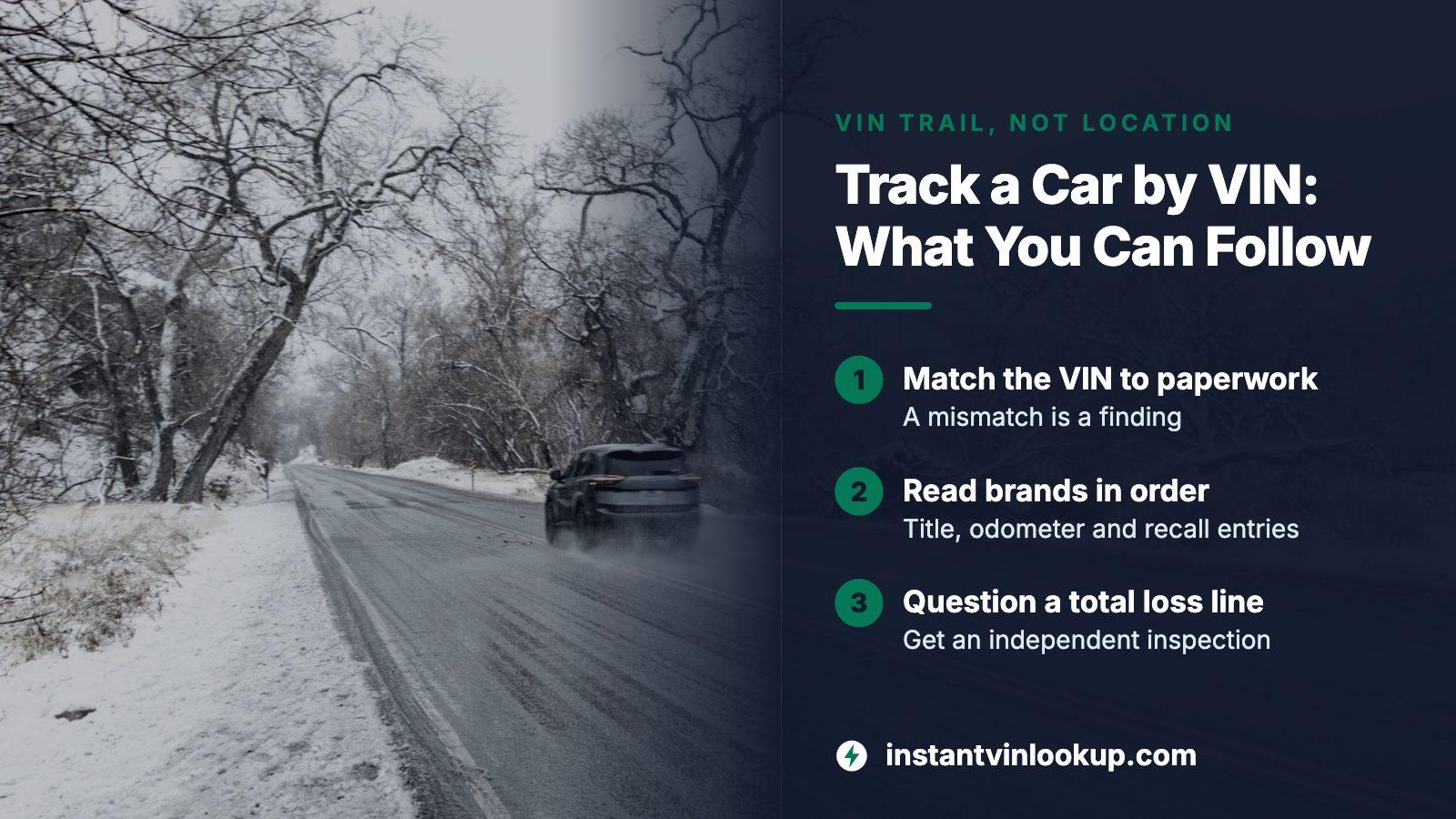
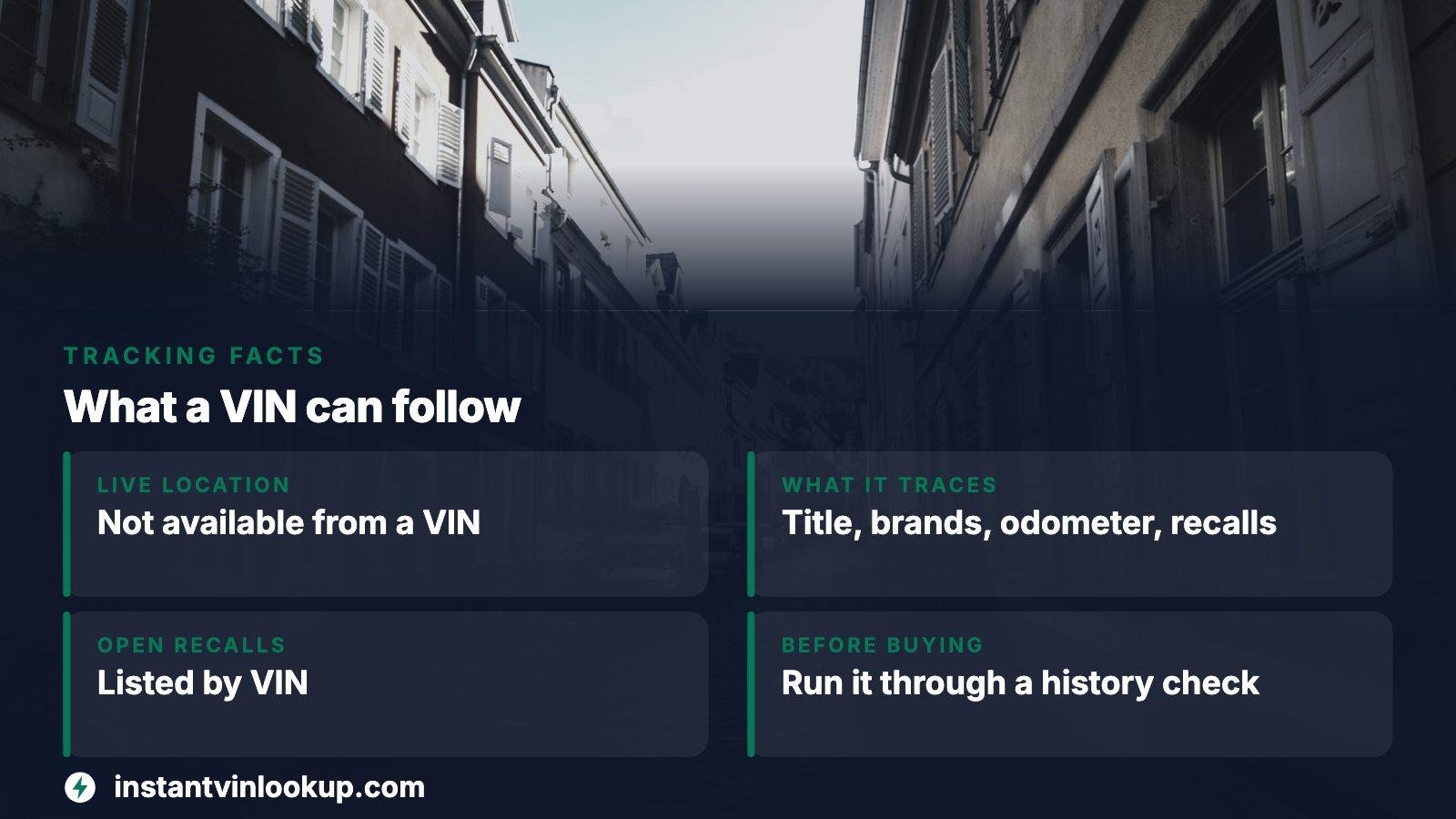
You cannot track a car's live position by VIN, because the number carries no location data and no public tool turns it into one. You can track the car's history with it: states that titled it, damage or salvage labels, mileage readings and open safety recalls. Run the VIN through a history check before you buy.
- Live location
- Not available from a VIN
- What it traces
- Title, brands, odometer, salvage, recalls
- Free first step
- InstantVINLookup preview
A serial number is not a tracking device
People type this search for two different reasons. Some want to find a car, as in where is it parked or who has it. Others want to follow a car's life, as in where has it been titled and what has happened to it. The second goal is realistic. The first is not.
A VIN is stamped when the vehicle is built. NHTSA's decoder explains that it works from information manufacturers submit about how they assign the characters, and what comes out is a description of the vehicle as built: make, body, engine and similar specifications. Nothing in that catalog records where the car sits today.
Anyone promising a live map from a VIN alone is selling something the number cannot supply. Live location comes from hardware or a connected-car account that the owner controls, not from the identification number.
The trail a VIN does let you follow
Every institution that touches a car files its records under the VIN. That makes the number a thread you can pull from the first sale to the current listing. Here is what typically sits on that thread.
| Record | What it tells you | Who files it |
|---|---|---|
| Title history | Which states issued titles and when | State titling agencies |
| Brands | Labels like junk, salvage or flood | State titling agencies |
| Odometer readings | Mileage at each recorded event | Titles, inspections, sales |
| Total loss and salvage | Severe damage declared by an insurer or yard | Insurers, salvage yards, recyclers |
| Open recalls | Safety campaigns not yet repaired | Manufacturers via NHTSA |
Together these answer the question a buyer actually has: has this car been somewhere it should not have been.
Where the title trail comes from
The national title database behind much of this is NMVTIS, run under the Justice Department. A report from it is deliberately lean. It lists the current title state with a date, any brands, an odometer figure, and whether insurers or yards logged a total loss or salvage event.
State motor vehicle agencies feed it, as do insurers and the businesses that scrap or auction wrecks, because federal law obliges them to keep filing. Repair work, recall notices and upkeep records are left to other sources.
A thin report is fine
The federal program itself calls a clean result a good thing. Empty space under brands and salvage means nothing was filed, not that a page failed to load.
Following the safety side: recalls
Recalls are the part of a car's story that keeps changing after the sale. NHTSA publishes campaigns by make, model and model year through its recalls data, and a single year of one model can carry several. For a 2013 Honda Accord the recalls API returned five campaigns when I queried it.
A year-level list tells you what exists, not which notices reach the vehicle you are standing next to. Manufacturers name production windows or equipment, so only a lookup by the full VIN settles whether one particular car falls inside a campaign and whether the fix happened. Treat any used car with an unchecked recall status as unfinished business.
How to run the trace in three steps
- Read all 17 characters off the vehicle, then match them against the ad and the paperwork. Any difference between the two is a finding by itself.
- Enter it at InstantVINLookup to see the free preview, which confirms the vehicle details before you spend anything.
- If the car is a serious candidate, buy the full report and read the title, brand, odometer and recall entries in order.
The report is one payment, and a multi-report pack suits shoppers weighing a few cars. Nothing renews. Current options are on the pricing page.

Reading what the trail shows, and what it skips
Look for sequence. A title issued in a new state soon after a total loss, or an odometer figure lower than an earlier one, is worth raising with the seller before you visit again. Brands matter because they describe a status that can follow a car across state lines.
- A brand in any state belongs in the price conversation, whatever the car looks like now.
- A mileage drop between records points to a rollback or a bad entry; service records can settle which.
- A total loss entry followed by a normal-looking title calls for an independent inspection.
Records only exist for events someone reported. A repair done at a private garage, or a fender bender settled in cash, can leave no trace.
What to do with a VIN when the report is quiet
Federal shopper guidance pairs the history report with an independent inspection. It also says to ask for service paperwork, whether the owner, a dealer or the garage holds it, and to speak with the previous owner if the seller does not know the car's past.
NICB runs a free VIN search that covers flood damage among other things, so it makes a useful second look alongside any paid report. A mechanic can find what no database holds: fresh paint over old damage, mismatched panels, water lines under carpet.
If you are trying to find a missing vehicle
Searching a VIN will not locate a stolen car, and a history site cannot send anyone to it. If a vehicle has been taken, the route is a police report that includes the VIN, a call to your insurer, and any location service tied to the vehicle's own app or hardware.
The VIN becomes useful afterward in a different way. A stolen vehicle that is resold has the VIN printed on its records and its body, and a buyer who checks the number against history data may catch it before money changes hands.
Where this information comes from
- NHTSA: vPIC Vehicle API — Shows the VIN decoder returns manufacturer-submitted specifications, not position.
- NHTSA: Recalls API — Example of recall campaigns listed by make, model and year.
- NMVTIS: Understanding a vehicle history report — Source for the five title indicators and who reports them.
- NMVTIS: Used car buying tips — Inspection and records advice, and the mention of NICB's database.
Sources and photos: Facts checked against the sources above in November 2026. Photos by Zoshua Colah, Alejandro Escamilla and Karwin Luo on Unsplash; diagrams by InstantVINLookup.
Keep reading
- VIN Lookup: Check a VIN Number on a Car Before You BuyHow a lookup and its free preview work from start to finish.
- What Does a VIN Check Tell You About a Used Car?A fuller list of what lands in a VIN report.
- Where Is the VIN Number? Find It in a Minute, Then Verify ItFind the number on the car before you run anything.
- NICB VIN Check: What the Instant Theft and Salvage Lookup ShowsThe free insurer-backed theft and salvage search, and its limits.
Frequently asked questions
Can I track a car by its VIN number?
Not in real time. The VIN identifies the vehicle and does not transmit a position, so no public tool can map it. What you can trace is documented history: titles, brands, odometer readings, salvage records and recalls, which show where the car has been in the system.
Will a VIN tell me the owner's name?
A VIN check is built for buyers evaluating a vehicle, not for identifying people. Reports describe the car's records, not the people behind them. If you need to reach an owner, go through the seller, a police report or the state's formal process.
Does a VIN show every state a car has been in?
It shows states that issued a title or reported a brand, since those agencies feed the national title system. A car that was driven or parked in another state without a title event will not appear. Treat the list as the paper trail, not a travel log.
Is the free preview enough to trace a car?
The preview confirms the vehicle details so you know you typed the right number. It is the first step, not the whole answer. The title, damage and odometer entries sit in the full report, which is a single payment with nothing recurring.
How do I check whether a recall applies to my car?
Year-level lists show campaigns for a model, but only a VIN-level check shows whether yours is covered and still unrepaired. Run the VIN, note any open campaign, and call a dealer for that brand to schedule the repair.
Now check the car itself
The guide explains what to look for. The report shows what this VIN has on record.