THE SHORT ANSWER
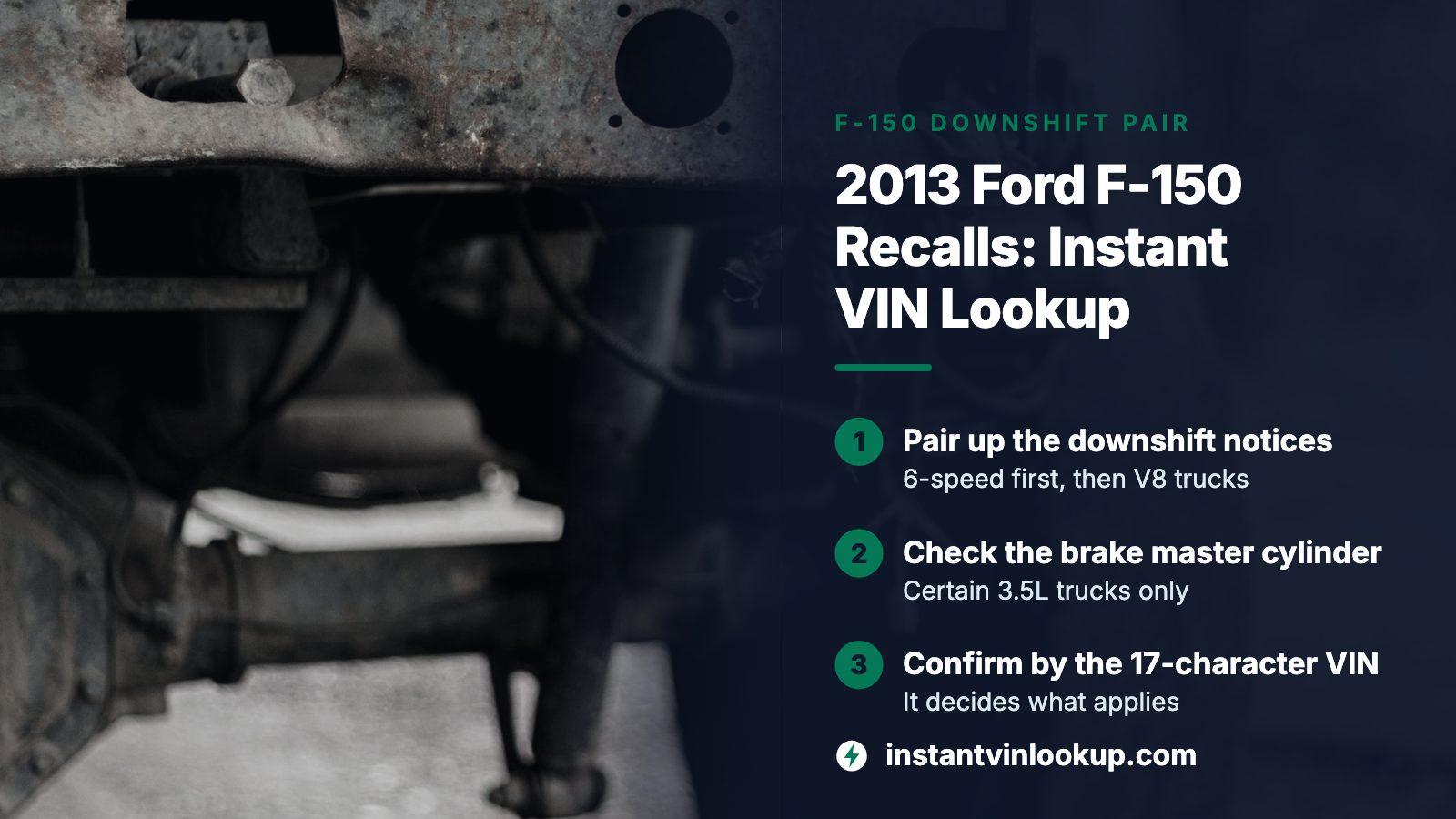
The 2013 F-150 has three campaigns on file with NHTSA. Two cover a transmission that can drop into first gear at any speed, the first on trucks with a 6-speed gearbox, the second on V8 trucks that already got the first fix. The third is a brake master cylinder leak on certain 3.5L trucks. Ford dealers do all three repairs at no cost; only the VIN reveals which are still unfinished.
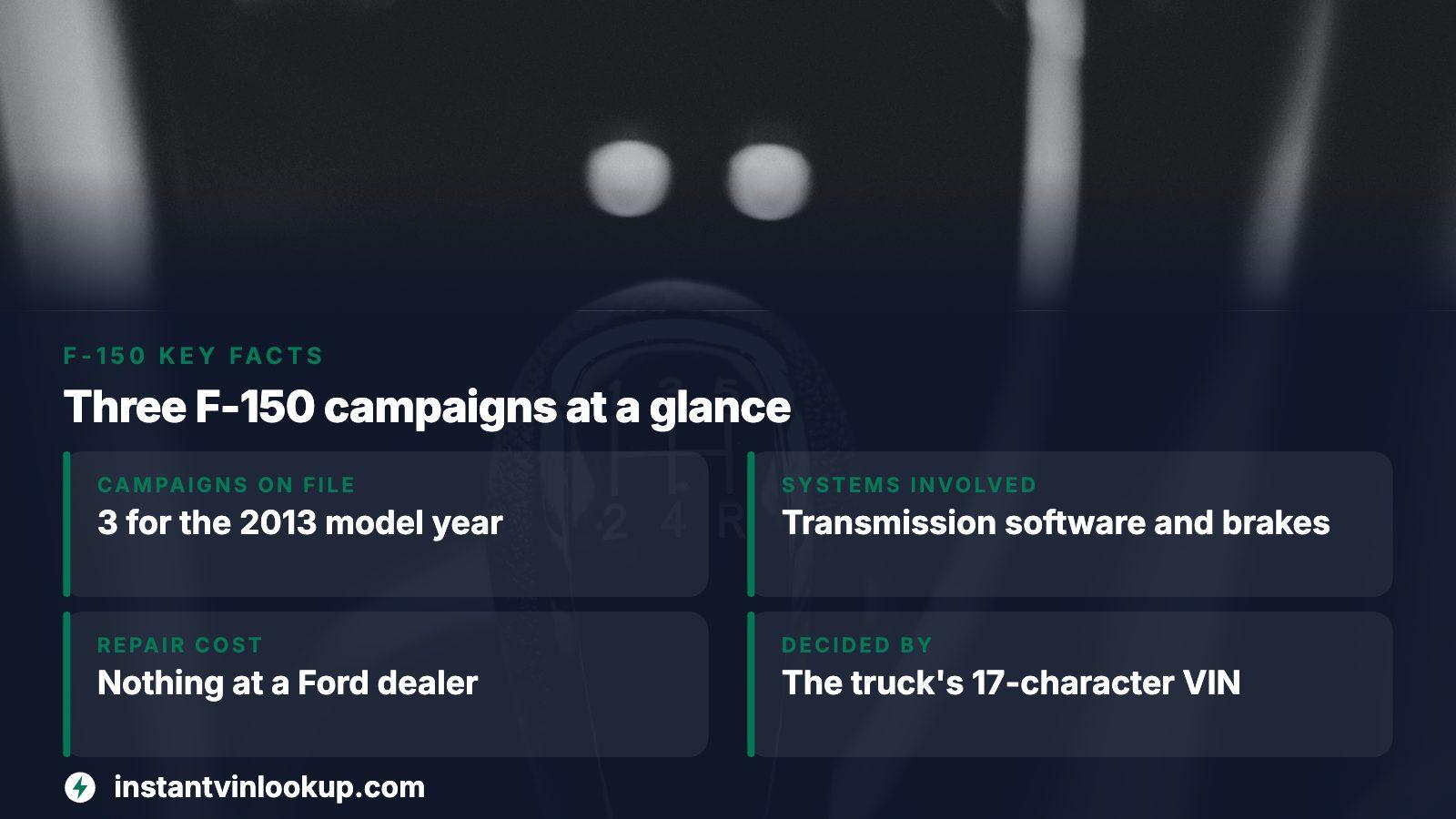
- Campaigns on file
- 3 for the 2013 model year
- Systems involved
- Transmission control software and brakes
- Repair cost
- Free of charge at a Ford dealer
- Decided by
- The truck's 17-character VIN
Three campaigns, and why a lookup beats a list
Federal data holds three recall campaigns for this model year. That sounds simple until you read who each one covers. One reaches 2011 through 2013 trucks with a particular gearbox, one reaches only gasoline V8s, and one depends on the engine and a build window. A 2013 pickup can sit inside all three, one, or none.
That is why this site starts from the number stamped on the truck. Type it into the lookup and the free preview begins the check at once. Buying the full report is a separate, later choice.
The downshift pair: 19V075000 and 19V433000
The first notice, 19V075000, concerns certain 2011 to 2013 F-150 trucks with a 6-speed automatic. The transmission may unexpectedly drop into first gear whatever the road speed, which can cost the driver control. Ford's fix is a software reprogram of the powertrain control module. The recall began March 4, 2019.
The second, 19V433000, exists because the first reprogram fell short on some trucks. Its scope is 2013 trucks fitted with the 5.0L or the 6.2L gasoline V8 that had already been through the earlier update. The software used then lacked changes needed to stop the downshift, so dealers reprogram the module again. That one began June 24, 2019.
What this means in practice
A truck that shows the first campaign as done may still owe the second. Do not accept a verbal claim that the transmission recall was handled. Ask which campaign number was closed.
The brake campaign: 16V345000
This one is narrower. It applies to 2013 and 2014 trucks built between August 1, 2013 and August 31, 2014, with the 3.5L engine. The master cylinder's rear cup seal may roll, letting brake fluid escape from the primary reservoir into the booster.
NHTSA's description of the result is blunt: a complete loss of front brake function. The remedy is a new master cylinder and, where needed, a new booster, at no charge. The recall began October 28, 2016, so a truck from that build window has had years for the work to be done or skipped.
Build date matters here more than model year. A 2013 truck assembled before the window opens falls outside the notice, which only a VIN check can confirm.
All three at a glance
| Campaign | Fault | Trucks named | Fix |
|---|---|---|---|
| 19V075000 | Sudden downshift into first gear | 2011 to 2013 with 6-speed automatic | Reprogram control module |
| 19V433000 | Same downshift after an incomplete update | 2013, 5.0L and 6.2L gasoline V8s | Reprogram control module again |
| 16V345000 | Brake fluid leak at master cylinder | 3.5L trucks built August 2013 to August 2014 | New master cylinder, booster if needed |
How to run the check on a 2013 truck
NHTSA points owners to the bottom corner of the windshield on the driver's side, where the 17-character number can be read from outside. Paperwork repeats it: the registration card always, and sometimes the insurance card. If you are shopping, photograph it at the lot and type from the photo.
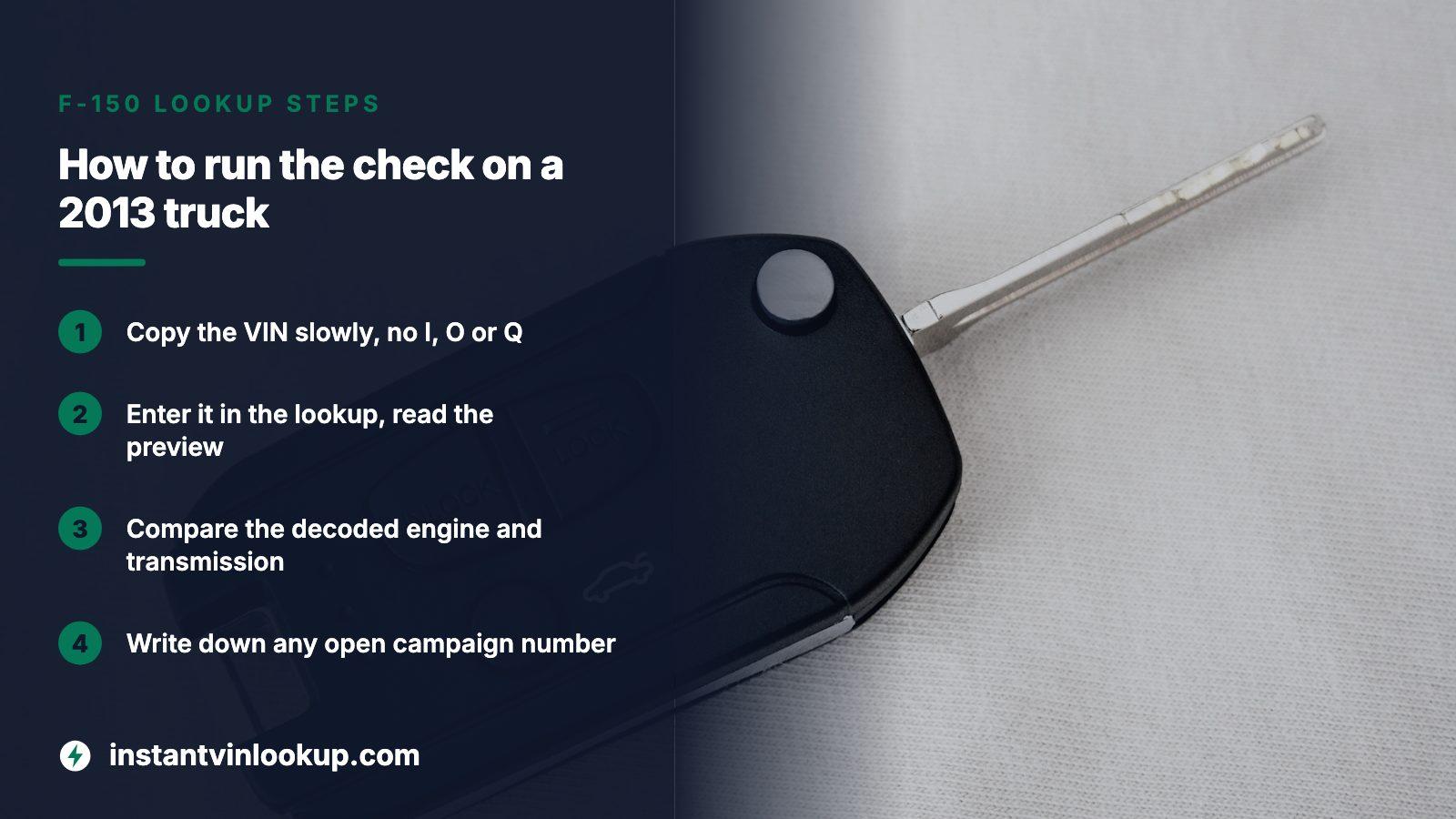
- Copy it slowly, because I, O and Q are never used in a VIN; seeing one means you misread a 1 or 0.
- Enter it in the lookup on this site and read the preview.
- Note the engine and transmission the decode reports, then compare them with the truck. The three campaigns split on exactly those details.
- Write down any open campaign number so you can raise it with the seller or the dealer.
Reading a result, and what the federal search leaves out
NHTSA's own VIN search shows unrepaired recalls only. A campaign already fixed will not appear, and a clean answer reads "0 unrepaired recalls associated with this VIN." It can also miss a freshly announced campaign whose VINs have not all been loaded yet, so check again before you pay a seller.
- Open campaign: get the dealer repair booked ahead of the sale, or make it a term of the deal.
- Seller says it was done: ask for the dealer invoice and match the campaign number.
- Truck had the 2019 software update: confirm the repeat reprogram was not missed.
- Clean result: still drive the truck and feel for harsh downshifts.
What a recall check cannot show
Recalls describe factory defects. They say nothing about how this particular F-150 was used. A truck can be recall-clean and still have a branded title, a rolled-back odometer or a lien.
The paid report on this site covers that ground. For a pickup, start with mileage history, collision and damage entries, any title brand, and whether it worked as a fleet or job-site truck, which wears a pickup differently than a commute. Title data comes from NMVTIS, the federal system created to keep buyers away from fraud and unsafe vehicles.
Paying for it, and your move after the result
You pay nothing to see the preview. A report is a single purchase, and shoppers comparing several trucks can take a 3, 5 or 10 bundle instead. Nothing renews. Amounts are on the pricing page.
Recall repairs themselves cost nothing. Ford must fix the defect, and the work follows the truck, not the owner who ignored the letter. Notices go by mail to the registered owner, and a later buyer may never have seen one, since Ford has 60 days after informing NHTSA to send them.
Where this information comes from
- NHTSA: Check for Recalls — Explains what a VIN search shows and omits, and where the VIN is found.
- NHTSA recalls API: 2013 Ford F-150 — The campaign numbers, covered trucks, dates and remedies listed above.
- VehicleHistory.gov: NMVTIS — The federal title information system behind brand and fraud checks.
Sources and photos: Facts checked against the sources above in November 2026. Photos by Zoshua Colah, Shadow Photography and Alok Sharma on Unsplash; diagrams by InstantVINLookup.
Keep reading
- 2017 Ford F-150 Recalls: Look Up Your Truck's VIN NowThe same lookup for a newer F-150, with a much longer campaign list.
- VIN Lookup: Check a VIN Number on a Car Before You BuyHow a VIN lookup works for any vehicle and what the preview adds.
- Where Is the VIN Number? Find It in a Minute, Then Verify ItOther places a VIN is printed when the windshield plate is hard to read.
- NHTSA Investigation Check: Look Up a Model, Then Run the VINOpen federal investigations, which come before a recall exists.
Frequently asked questions
How many recalls does the 2013 Ford F-150 have?
NHTSA's data lists three campaigns for the 2013 model year: 19V075000 and 19V433000 for a transmission downshift fault, and 16V345000 for brake fluid leaking at the master cylinder. Which of them reach one truck turns on engine, gearbox and build date, and the VIN settles that.
Do I pay for a 2013 F-150 recall repair?
No. Each of the three notices says the dealer performs the remedy free of charge. The obligation stays with the truck, so a previous owner's ignored notice becomes yours to book. Phone a Ford dealer with the VIN and find out about parts before you set a date.
Why would a truck owe both downshift campaigns?
The second campaign was written for trucks that already had the first software update but still lacked the changes that stop the downshift. Those are the 2013 trucks with the 5.0L and 6.2L gasoline V8s. A truck can therefore show the first as done and the second as open.
Will a VIN search show a recall that was already fixed?
Not on NHTSA's tool, which lists unrepaired recalls only. When a seller claims the repair happened, request the dealer invoice and compare its campaign number. A clean search result does not tell you what was repaired, only that nothing open was found.
Does the free preview replace the full report?
No. The preview is a first look at what is held for the VIN. The report is paid once and adds what a recall list never holds, among them title brands, mileage entries and crash history. Read the preview before deciding.
Now check the car itself
The guide explains what to look for. The report shows what this VIN has on record.